What Is a Forklift? Where Is It Used?
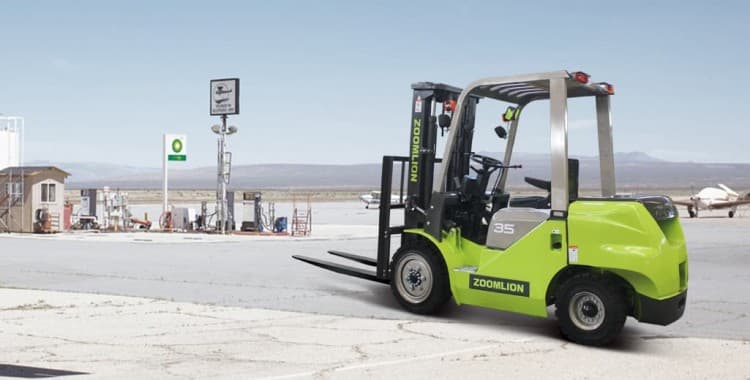
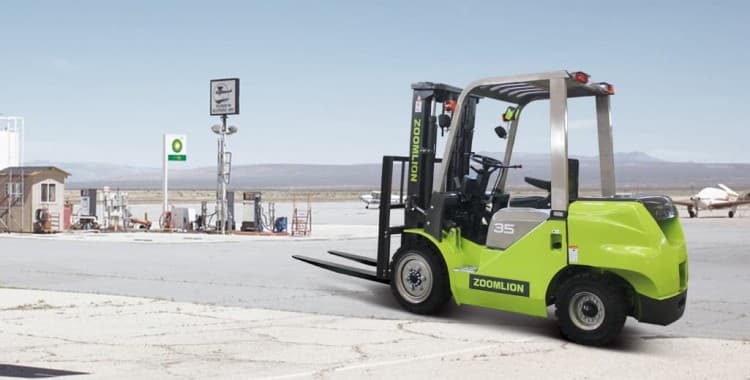
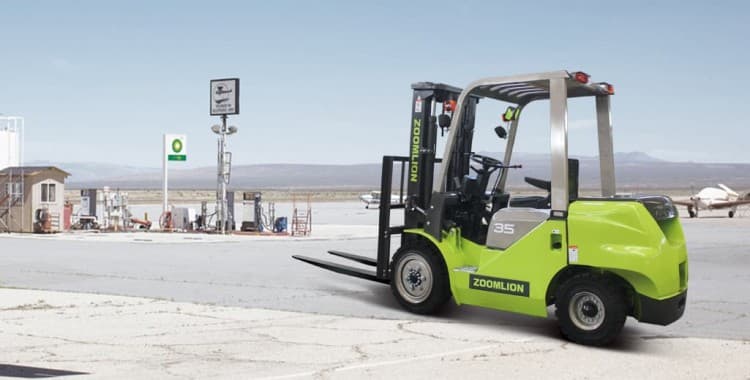
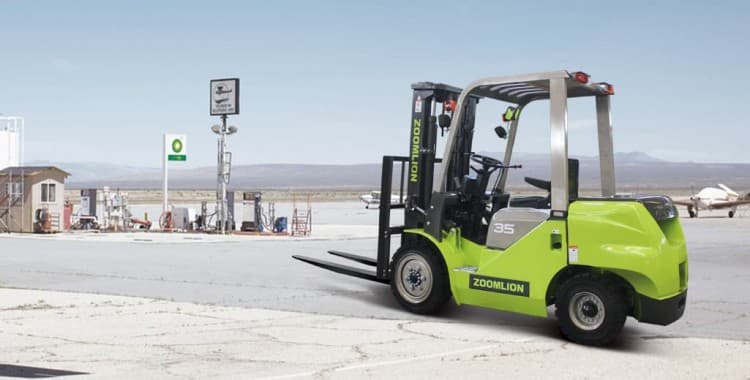
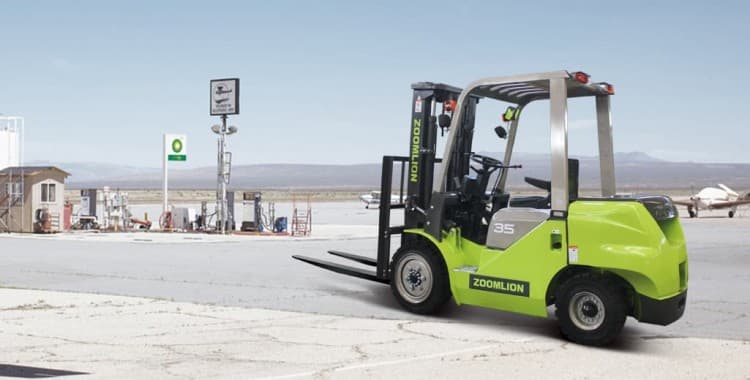
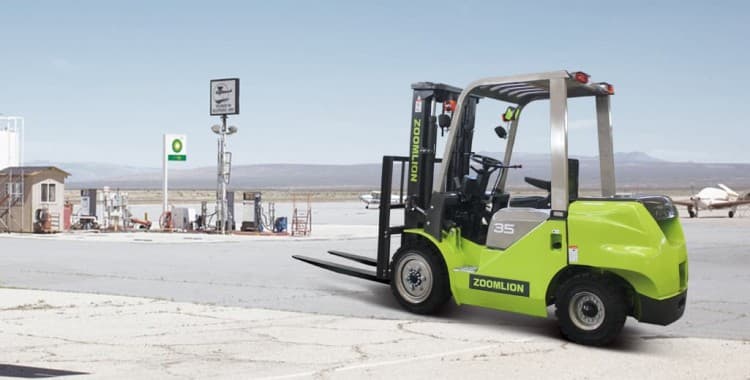
A forklift is a work machine designed to lift and stack objects that are too heavy to be carried by human strength, using the lifting arm at its front, in areas such as warehouses, ports, bonded warehouses and factories.
First used in the 1800s, these work machines, small in size but great in capability, are taking an ever larger place in our lives. Looking at the meaning of the word, forklift means a stacker with forks. They are designed to lift, carry and stack loads that people cannot carry. They vary according to their carrying capacity, which ranges from 0.5 tons to 40 tons.

Since they were introduced in the 1800s, their features have been further developed, especially after World War I; at that time they operated with the help of chains. With the advancement of technology, rider forklifts came into our lives in 1917, followed by forklifts with masts in 1923. In the following years, more practical forklifts with high maneuverability began to be used more actively in the industrial sector. Today, forklift features continue to be renewed every day through R&D work.
While forklifts are used to accomplish major tasks, the rules that must be followed during use should not be ignored. When used by an operator who takes the necessary precautions, they make life easier as lifesaving machines that lighten the workload.
Forklift Components
A forklift consists of various components. For forklifts to operate efficiently, the power source and the machine’s own weight must act in the opposite direction to the maximum capacity it can lift.
1-Forklift Chassis
The forklift chassis is the most important component, forming the base of the machine. The most important parts, such as the wheels and the counterweight, are attached directly to the forklift chassis.
2-Counterweight
The counterweight is a cast iron weight attached to the rear of the forklift. The purpose of the counterweight is to balance the lifted load. In an Electric Forklift, the counterweight is fixed to the lead-acid battery.
3-Power Source
Forklifts operate with two types of power sources. The first is internal combustion engines, which run on fuels such as LPG and diesel. Diesel forklifts and LPG forklifts that use this operating method are mostly used for outdoor work. The second power source method is electric forklifts. These forklifts draw their power from a battery. They are mostly used for indoor work.
4-Carriage
The carriage serves a fundamental function on the forklift. The carriage is fixed to the mast rails so that it can be moved up and down easily.
5-Mast
The mast is a vertical part that lifts loads and lowers them. The mast component consists of “Interlocking Rails” that provide horizontal control.
How Does a Forklift Work?
Forklifts work by delivering power to three basic components.
1-Lifting Mechanism: Hydraulic Cylinders
The lift lever is connected to an electric air pump at the base of the forklift. When the handle is pressed, it triggers the air pump, which draws outside air through a filter and pushes it into a pipe leading to the hydraulic cylinders.
A hydraulic cylinder consists of a hollow tube closed at one end and sealed with a flexible, lubricated piston. Gases enter through the base of the cylinder, allowing them to enter without leaking out.
The volume of gas in the cylinder increases the pressure inside it. The pressure applied to the area of the piston head produces an upward force. This force causes the piston to rise, the volume of the gas to increase and the pressure to be minimized. It creates physical balance at the forklift’s height and produces a force equivalent to the Gas and the Forklift’s Load.
- To Raise the Load
The operator pushes the lever forward, signaling the forklift to pump more air into the cylinders.
- To lower the load
The operator pulls the lever back, which signals a special valve to release the gases from the cylinder.
2-Lifting Mechanism: Roller Chain Sprocket
The hydraulic pistons are connected to two main vertical structures known as the “mast.” The forks used to carry the load are connected to the main body of the forklift by a pair of roller chain sprockets, with the support forming a gear at the top of the mast.
Therefore, when the hydraulic pistons push the masts upward, the gears on the masts are pressed against the roller chains. Because one side of the chain is fixed to the forklift’s immovable frame, the only way the masts can move upward is for the gears to rotate clockwise and pull up the top of the forks.
The importance of this mechanism is that the forks travel a distance the cylinders cannot reach. If chain sprockets were not used with the cylinders, forklifts would require much longer cylinders to lift the load to an equivalent height.
3-Controls
Forklifts have two sets of controls: one for steering and the other for lifting.
Steering Control
The steering control works similarly to a golf cart, with an accelerator pedal, steering wheel, brake, reverse gear and forward gear. Forklifts use rear-wheel steering. When you turn the steering wheel, the wheel on the rear axle begins to turn back and forth. This is designed to give the operator a greater degree of turning and precision while carrying a load.
Lift Control
The Lift Control includes two levers: one moves up and down to tilt the load back and forward, and the other is for lifting.
The Lift Control performs the same function as the lifting mechanism described above. The Tilt Mechanism is slightly different. There are two additional pairs of hydraulic cylinders connected to the base of the masts.
When the Tilt Lever is moved forward, air automatically fills the chamber. The rise in pressure is enough to push the piston head and allow the masts to move away from the body of the vehicle.
After the Tilt Lever is moved back, air slowly passes into the cylinder and is pumped into the other parts of the cylinders connected to the mast. When the pistons are pushed forward, the masts are pushed back toward the vehicle.
The Industries Where Forklifts
Are Most Used
Construction
Industrial forklifts serve as very useful equipment on construction sites, as they can be used to carry heavy building materials to tall buildings over rough terrain. They combine the functions of a lifting hoist and a transport vehicle and make them efficient. Forklifts can unload bricks, construction materials and steel beams from delivery trucks and carry them to the job site.
Warehousing
The most common area of use for forklifts is warehouses. Forklifts are mainly used for loading and unloading trucks and for carrying and stacking goods. A wide range of forklifts is available, from high-tonnage forklifts for heavy-duty work to pedestrian-operated stackers.
Forklifts are manufactured in various sizes and tonnages according to changing needs, from a capacity of one ton for general warehousing services to a capacity of 50 tons for container handling.
Recycling
Forklifts are also used in recycling operations to unload recycling trucks or containers and to sort their contents. Forklifts can efficiently load and unload flatbed trucks, tractor trailers, lifts and rail vehicles. Fork attachments can be used to carry materials such as tires that could slip off the forks.
IMPORTANT INFORMATION: Before starting the loading/unloading operation, the work area must be well prepared. The vehicle’s brake must be applied. Fixed jacks supporting a semi-trailer that is not connected to a tractor must be installed to prevent the forklift from tipping over. Make sure the height of the vehicle’s entrance door clears the height of the forklift by at least 5 cm. Also, make sure that the docks and dock plates are free of obstructions and completely dry. When traveling without a load, the forks should be pointed down, and when traveling with a load, they should be raised.
Ports
Forklift trucks are used today to carry heavy containers and bulk containers from delivery trucks to port storage areas and then onto ships. After unloading, they are used to carry shipments of timber and steel.
Source – Wikipedia, the free encyclopedia
Can Anyone Operate a Forklift?
To operate a forklift, you first need to have a forklift license. Those who hold an operator certificate can operate this vehicle easily and legally. To obtain an operator certificate, you first need to contact companies that provide training for this certificate and apply. It is prohibited by law for persons without an operator certificate to operate a forklift, and doing so is subject to penalties.
Persons who are at least 18 years old and have no physical or mental health problems can obtain a forklift certificate. Forklift operator certificates are issued by companies that provide Class G licenses and by institutions authorized to issue this certificate through the Ministry of National Education. If the operator certificate and the forklift license are to be obtained at the same time, the traffic registration is carried out as a Class G license.
Types of Forklifts
Forklifts are divided into different groups according to their intended use. These groups are generally determined by the forklift’s fuel.
According to their energy use, forklift types are divided into 3 groups:
- Diesel,
- LPG
- Electric (Battery-Powered)
When examined according to the types of drivetrain, two groups emerge.
- Forklifts with hydraulic torque converters
- Forklifts with geared transmissions and clutch pressure
Electric Forklifts
Thanks to their superior features and the fact that they do not pollute the air, these forklift models are highly preferred, especially for warehouses. Operating with a battery, these models are ideal for long-term use. Especially when used with a spare battery, they enable efficient operation in workplaces with double shifts. Since they have no exhaust issues, they are highly preferred in enclosed areas.
Diesel Forklifts
They have a high carrying capacity and deliver strong performance with world-renowned engine options. With a low fuel system, they offer an optimal field of view. They are preferred especially in high-intensity operations. Vibration-reducing suspension and a spacious operator area provide a less tiring work experience.
LPG Forklifts
LPG forklifts are also highly preferred thanks to the fuel advantages they offer. They are generally used outdoors and in enclosed areas with adequate ventilation. They can lift up to a height of 7 meters. They have a maximum load capacity of up to 15 tons.
Forklift Maintenance and Service
As with all vehicles, forklifts also need maintenance. Having them serviced at regular intervals is important for using them more efficiently. Regular maintenance is required to ensure healthy and long-lasting use, to fix minor issues that could lead to breakdowns later on, and to address drops in performance. For this, you need to use a professional and reliable forklift service.
Forklifts receive daily, weekly and monthly maintenance. In addition, periodic maintenance is recommended every 3 months or after a certain mileage or number of hours.
The procedures carried out during maintenance can be listed as follows:
- The oil level of the forklift engine is checked.
- The V-belt is checked for wear, the degree of fraying at its edges, any cracks and its lubrication level
- The tank is checked for fuel
- The amount of water in the cooling system is checked
- The air filter is cleaned
- The system is checked for fuel leaks
- The tightness of the engine belts and pulleys is checked
Apart from these, there are more comprehensive maintenance procedures carried out monthly and every 3 months. These checks include many procedures such as cleaning the diesel and oil filters, checking the valve settings, cleaning the radiator, checking the radiator for cracks or water leaks, checking the steering system, checking the lifting system and checking the engine connections.
When Should Forklifts Be Replaced?
Forklifts that no longer perform as they used to after a certain period of use, even if they are maintained, have a shorter life and service life. Forklifts that receive periodic maintenance last longer than those that do not. Despite all precautions, there are situations in which forklifts need to be replaced. These situations can be examined as follows:
If the forklift’s fuel consumption has started to increase to the point of straining your budget, the vehicle may generate serious costs. A new forklift should be purchased to avoid inflated bills. In this regard, internal combustion or electric forklifts will provide more economical use. If you are not currently in a position to buy one, you can solve the problem at a lower cost than your bills with forklift rental.
If the forklift keeps breaking down and repairs become unavoidable despite periodic maintenance, this may be a sign that it should be replaced. After recurring breakdowns, the forklift loses efficiency and causes lost time. Forklifts that constantly require repair and still do not run properly need to be replaced, as they also strain your budget in terms of cost.
As the workload increases over time, operations at the work site may grow and the work site may expand, creating the need for a new forklift. If loads increase and capacity is exceeded, the forklift needs to be replaced with one that has a higher capacity. The most suitable model should be chosen so that the forklift can move safely in the warehouse or work site. When capacity and workload increase, an overloaded forklift poses a threat to site workers, the forklift operator and the forklift itself. For the safety of life, it is necessary to use a new forklift especially suited to the work site.
Forklift Rental
Forklifts, which businesses most frequently need, are preferred as very important work machines in loading and unloading materials and in the shipping process. These vehicles, which have a very wide range of uses, are preferred especially in industrial and warehousing areas. While they are needed at all times, they may also be needed only from time to time. When a forklift is needed only for situations such as loading or unloading a single truck, a rental forklift is preferred.
Rental forklift use is very widespread and is preferred for specific periods as needed.
Forklift Prices 2025
To share some important information for those researching the market for a rental or for-sale forklift as needed, we should note that certain criteria are taken into account. Forklift prices vary depending on the brand, capacity and operating system of the chosen forklift. If you are considering forklift rental, prices become more economical as the rental period gets longer. If you are curious about forklift prices, contact us to learn the most current and accurate price range, discuss all the details and get clear information.